
PROCEDURAL RULES
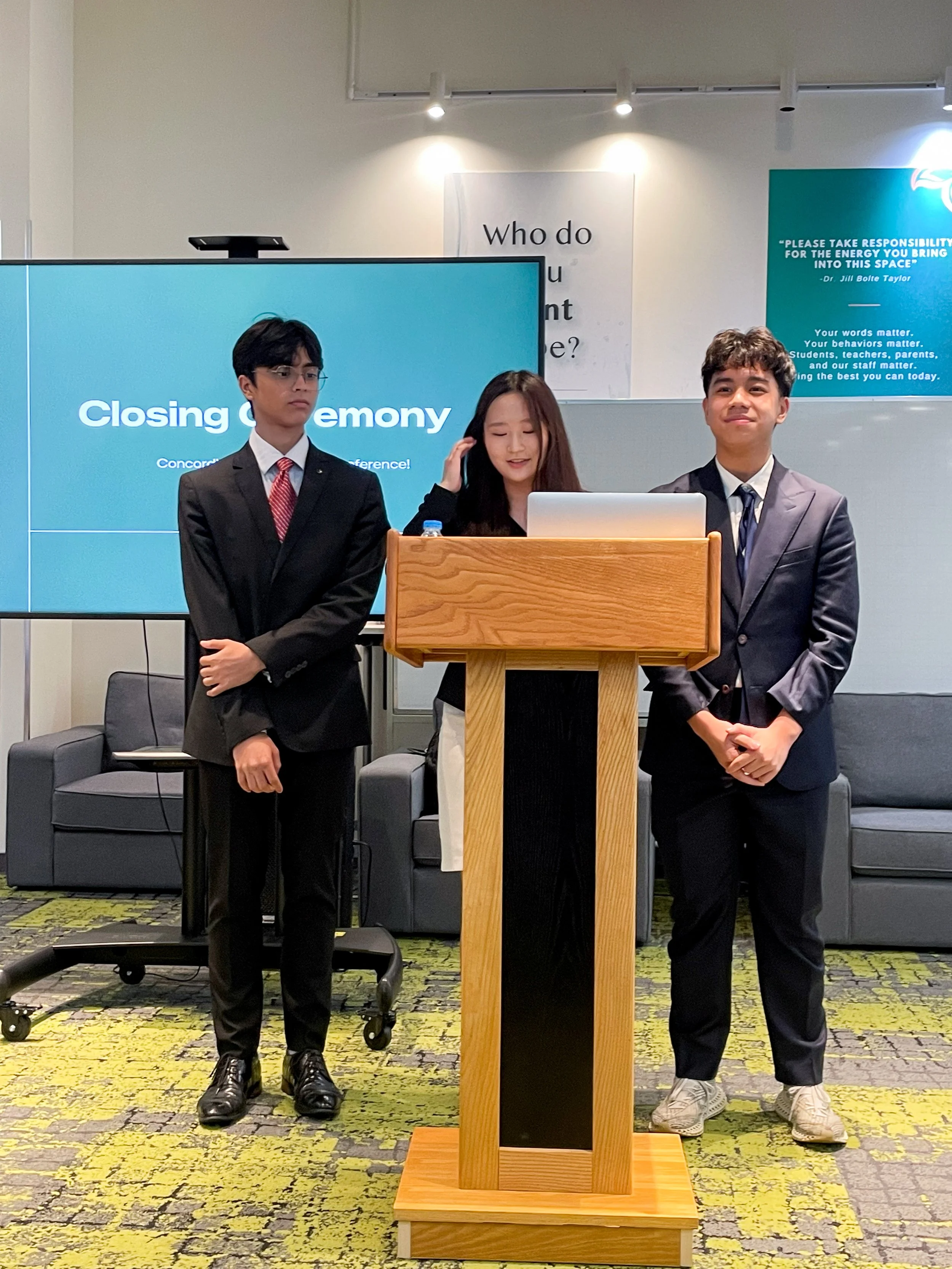
CISHMUN conferences adhere to THIMUN rules of procedure.
If necessary, we recommend viewing at least one of the sources below to familiarize yourself with parliamentary procedure:
COMPREHENSIVE RULE GUIDE: “Guidelines for Participation” hosted by THIMUN on the Education webpage.
SHORT OVERVIEW: “General Rules of Procedure at THIMUN Conferences” By David Williams, in collaboration with the THIMUN Foundation (7 pages) LONG OVERVIEW: “THIMUN Rules of Procedure Guide” by Berkeley Model United Nations (24 pages)
SHORT VIDEO OVERVIEW: “THIMUN Rules of Procedure” by SMICMUN (8:53)
If you have a procedural question during the conference, use a “Point of Parliamentary Inquiry” by raising your placard after the current speaker has finished. CISHMUN Chairs have been instructed to welcome parliamentary inquiries to ensure that all delegates, independent of experience level, feel confident in participating in the simulation–this is especially true for committees designed for newer delegates (e.g. General Assembly).
DRESS CODE
Wear Western Business Attire (WBA). This applies to dress shoes, ties (for boys) and business jackets (for boys when speaking at the podium).
OPENING SPEECHES
60 seconds. Podium with placard and jacket on. No devices.
CISHMUN requests the following regarding Opening Speeches:
Don’t use AI to script your speech. AI opening speeches are generic, prevent other delegates from getting to know you, and cast doubt on your understanding of the topic.
Memorize your speech. Speeches read from a script disengage you from your audience.
Edit your speech. Ask a veteran delegate or MUN Director from your school to polish your speech before delivery.
Prioritize one topic. In committees with two topics, feel free to reference both, but focus the majority of your speech on presenting your country’s stance on what you consider to be the more pressing issue.
AI USAGE
CISHMUN places a premium on human-to-human interaction to develop the negotiating skills that we’ll use in college and career. Therefore, we ask that delegates strictly follow these guidelines when using AI.
ACCEPTABLE AI USE
Delegates may use AI for preliminary research and proofreading purposes.
Delegates may use AI to help them format their draft resolutions according to THIMUN guidelines.
Delegates may not present any text, written or spoken, that is generated by AI.
If you use AI to help format your resolution, use THIMUN’s sample resolution to train your LLM first.
If you use AI to edit opening speeches or draft resolutions, we recommend the following AI prompt:
Suggested AI Editing Prompt
Edit the following Model United Nations [Opening Speech/Resolution] as a copy editor—not as a co-author.
Your job is to:
Correct grammar, spelling, punctuation, capitalization, and formatting.
Improve clarity only when a sentence is confusing.
Ensure the document follows standard Model United Nations resolution formatting.
Preserve the author’s original ideas, arguments, tone, and organization.
Preserve the author’s current level of vocabulary and writing style.
Do not:
Add new operative or preambulatory clauses.
Introduce new arguments, evidence, or policy ideas.
Replace simple words with more sophisticated vocabulary.
Rewrite the resolution to sound more intelligent, diplomatic, or persuasive than the original.
Change the meaning or intent of any clause.
When finished, provide:
The edited resolution.
A brief list of the corrections you made (grammar, formatting, punctuation, or wording for clarity only).
If you find a sentence that is unclear, ask a clarifying question instead of guessing what the author meant.
ELECTRONIC DEVICE USE
Use of phones, laptops, and tablets is at the Chair’s discretion. Assume you will not have access to devices during early debate phases of each topic.
If your Chair prohibits device use while you need a piece of information you would normally find online, then raise your placard to request a “Point of Factual Inquiry”